
Ecommerce Loyalty Program Software Features That Improve Customer Lifetime Value
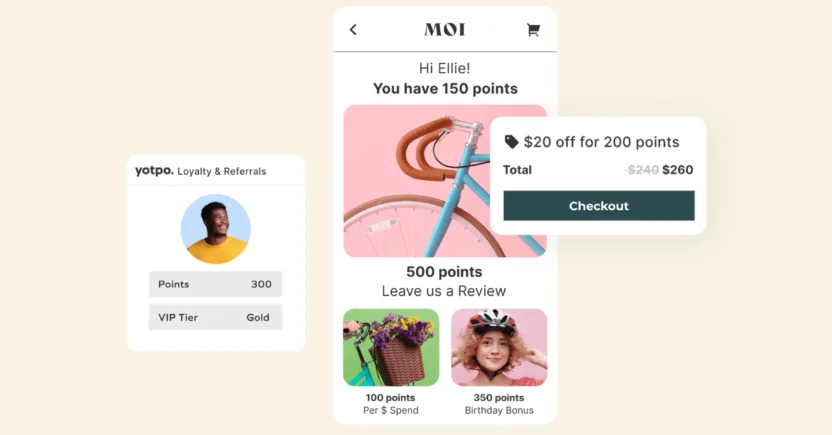
Keeping customers coming back is the goal, but coming back to what, exactly? In online commerce, different channels create different experiences and expectations, and it falls on brands to provide a seamless journey across all of them. One of the most effective ways to achieve that is through an ecommerce loyalty program platform.
According to Smile.io's State of Customer Loyalty in Commerce 2025 report, which analyzed over 585 million orders across 100,000+ ecommerce merchants, loyalty-generated value grew year over year across every major commerce industry in 2024. Small-to-medium brands processing 500 to 5,000 monthly orders saw the greatest gains – a 23.93% YoY increase – signaling that loyalty programs are delivering real, measurable results well beyond the enterprise space.
But none of that happens with a set-it-and-forget-it approach. The right ecommerce loyalty program software does more than hand out points. It influences behavior, deepens relationships, and compounds customer lifetime value (CLV) over time. Here's what to look for.
Tiered Rewards Drive Progressively Higher Spend
Flat points programs have their place, but tiered structures consistently outperform them on the metrics that matter most. It’s settled that VIP members generate higher average order value and purchase more often than lower-tier or non-members – a compounding effect that dramatically increases CLV over time.
The logic is straightforward: customers who can see a tangible next milestone (a higher tier, exclusive perks, better redemption rates) have a reason to consolidate their spending with your brand rather than spreading it across competitors. Effective ecommerce loyalty program software should let merchants configure tier thresholds, differentiated rewards, and status benefits without requiring developer intervention every time rules need updating.
Behavior-Based Incentives Beyond the Checkout
Transactional loyalty – earn points only when you buy something – captures just one dimension of the customer relationship. The most sophisticated platforms extend reward opportunities to non-purchase actions. Customers are increasingly active online, and companies must leverage that by rewarding them for actions beyond purchasing – writing a review, sharing on social media, recommending the brand, completing a product quiz, or engaging with educational content.
This matters because engagement breeds retention. When customers interact with your brand between purchases, they stay top of mind. Awarding points for these behaviors also creates more frequent touchpoints that the software can use to surface personalized offers and bring customers back to a purchase decision faster.
Personalization: In High Demand, Low in Supply
According to Deloitte Digital’s 2026 latest research, 73% of surveyed consumers said they want personalized loyalty program rewards, but only 45% of brands are delivering the kind of personalization consumers recognize.
Modern ecommerce loyalty program software should leverage purchase history, browsing behavior, and engagement data to serve relevant offers automatically. When a shopping experience is highly personalized, customers are more likely to add items to their cart and to spend beyond what they originally planned.
Native Commerce Platform Integration
One of the most underestimated features is seamless integration with your existing commerce stack. Loyalty programs that require heavy custom development to connect with your storefront, CRM, or order management system create bottlenecks that slow down deployment and limit data sharing.
As highlighted in Fielo's analysis of B2B ecommerce challenges, alignment between platforms is critical – a fragmented tech environment leads to siloed customer data and missed opportunities to act on signals in real time. Fielo addresses this directly through native Salesforce Commerce Cloud compatibility, enabling brands to launch loyalty programs in days rather than months, with preconfigured templates and secure data flows that don't disrupt existing setups.
Multi-Channel Engagement Capabilities
A loyalty program that only lives on your website misses customers wherever else they spend their time. Email, SMS, and messaging apps like WhatsApp are all valid channels for delivering reward notifications, personalized offers, and re-engagement campaigns. The ability to reach customers across channels – with consistent messaging tied to their loyalty status – is what turns a points balance into an active relationship.
Cart abandonment is a specific area where multi-channel engagement proves its value. A timely reminder that a customer is close to earning their next reward can be the nudge that closes the sale.
Real-Time Analytics and CLV Tracking
You cannot improve what you cannot measure. The best ecommerce loyalty program software surfaces metrics like repeat purchase rate, purchase frequency, average order value, and CLV trends in dashboards that business users – not just data analysts – can act on.
Tracking CLV over time also reveals which program features are actually driving retention versus which ones generate activity without profit. Active reward redeemers, for example, have a lifetime value higher than non-members who never engage with their points balance. That kind of insight should inform how you structure earning opportunities and communication cadences going forward.
All Features Working Together
No single feature lifts CLV on its own. Tiers motivate frequency. Personalization increases basket size. Multi-channel engagement reduces churn. Analytics tell you where to double down. And native integration ensures all of it runs on clean, connected data.
The brands seeing the strongest loyalty ROI are those treating their software not as a coupon engine but as a retention infrastructure – one that compounds customer value month after month. In a crowded ecommerce environment, where the battle for customer attention is fierce, that compounding effect is what makes loyalty programs one of the highest-return investments available.