
How to Give Your Home a Luxury Look Without Breaking the Bank
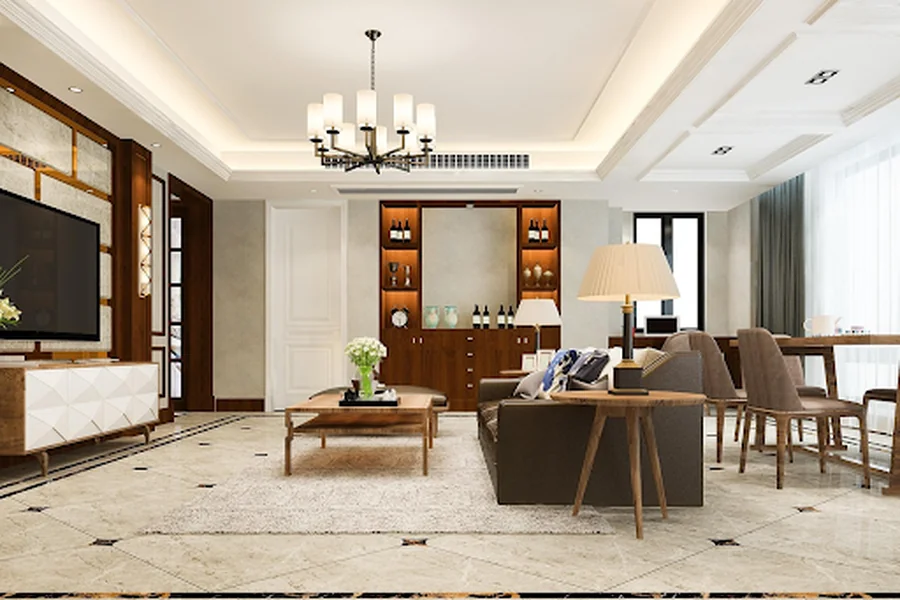
A luxurious home does not necessarily require a six-figure renovation or designer furniture. In many cases, an upscale appearance comes from thoughtful decisions about proportion, lighting, color, materials, and visual consistency rather than the amount spent on individual items.
That distinction has become increasingly relevant as American homeowners continue to renovate while becoming more deliberate about where their money goes. Therefore, the most effective strategy is not to make everything expensive. It is to make the home look intentional. Let’s find out how you can make your space feel polished, colorful, and considerably more expensive than it actually is.
Build Around a Color Palette
Color establishes a room’s emotional character before furniture or accessories have a chance to make an impression. Rather than covering every wall in the same predictable neutral, consider creating a restrained palette built around two or three complementary shades.
Warm whites, taupes, muted greens, deep blues, earthy browns, and soft terracotta can create considerably more depth than a room dominated by stark white or cool gray. For an especially cohesive effect, carry one color through several elements rather than concentrating it in a single feature.
Make Lighting a Design Feature
Even an attractive room can look ordinary under harsh, poorly polished lighting. That’s why luxury interiors tend to use lighting strategically, creating layers rather than relying solely on a single ceiling fixture. For example, you can combine ambient lighting with table lamps, floor lamps, wall sconces, under-cabinet illumination, or discreet accent lights.
Warm-toned bulbs can also create a more inviting atmosphere in living rooms and bedrooms, while brighter task lighting works better in kitchens, home offices, and work areas. The fixture doesn’t have to be costly. A relatively inexpensive pendant or chandelier can look sophisticated when it has the right scale and is positioned correctly.
Prioritize Surfaces That Define the Space
People often notice the largest visual surfaces before they notice decorative objects. Floors, walls, countertops, cabinetry, and window treatments establish the foundation on which the rest of the design depends.
That makes selective investment more efficient than spending heavily on every accessory. If the walls are already in good condition, for instance, repainting them may deliver more visual impact than replacing furniture. Similarly, updating tired hardware can give existing cabinetry a completely different character.
Flooring is also important because it influences the appearance of everything placed above it. When a renovation involves replacing worn materials, choosing a sophisticated finish and having it installed properly can make the room feel more finished. Homeowners considering a flooring update, for example, can work with a qualified vinyl tile installer who can help keep the overall design focused on your architectural details.
Upgrade Hardware and Architectural Details
Small architectural details can have an outsized effect on perceived quality. Cabinet pulls, door handles, faucets, switch plates, curtain rods, and even interior door hardware are inexpensive opportunities to introduce consistency and character. Instead of mixing several unrelated finishes throughout a room, establish a deliberate metal palette.
Trim can also become a powerful design element. Painting interior doors, baseboards, or window trim in a carefully selected shade can create architectural definition without major construction.
Endnote
Creating an expensive-looking home is more about understanding where visual impact comes from. A cohesive color scheme, layered lighting, carefully selected surfaces, and defined hardware can transform an ordinary interior without requiring an extravagant renovation budget.