
Why Pre-Commissioning Services Are the Most Important Step Before a Pipeline Goes Live
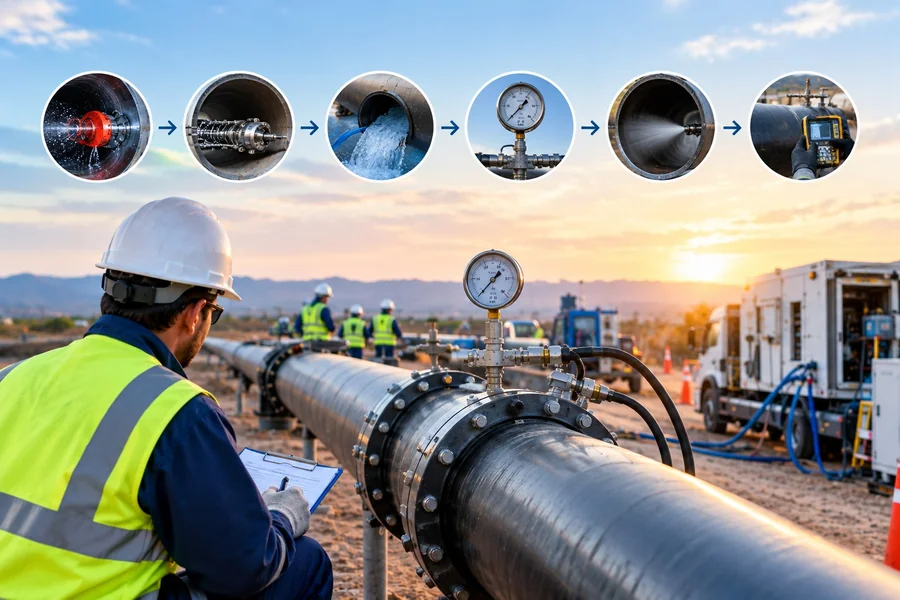
Every pipeline project reaches a critical crossroads once construction wraps up: the line looks finished, but is it actually safe to operate? This is where pre-commissioning services come in. Skipping or rushing this stage is one of the costliest mistakes an operator can make, and understanding why can save a project from major setbacks down the road.
What Are Pre-Commissioning Services, Exactly?
In simple terms, pre-commissioning is the bridge between “the pipeline is built” and “the pipeline is ready to carry product.” A newly constructed line, whether it’s meant for natural gas, water, wastewater, steam, or industrial chemicals, cannot simply be switched on. It has to be proven safe first.
Professional pre-commissioning services typically involve a sequence of technical checks designed to confirm three things: that the pipe is clean and free of debris, that it can hold pressure without leaking, and that it’s dry enough to avoid internal corrosion once product starts flowing through it. Without these steps, operators are essentially gambling with public safety, environmental risk, and very expensive equipment.
The Core Steps Involved
While every project has unique specifications, most pre-commissioning services follow a similar general sequence:
- Cleaning – Pigs, chemical solutions, or gels are run through the line to clear out construction debris, mill scale, and rust left over from fabrication and installation.
- Gauging – Specialized tools measure the internal diameter of the pipe to detect dents, ovality, or obstructions that could interfere with flow once the pipeline is in service.
- Filling – Water or another test fluid is introduced to displace trapped air, which is essential before pressure testing can begin safely.
- Pressure Testing – Also known as hydrostatic testing, this step pressurizes the pipeline above its normal operating level for a set period to confirm it can hold pressure without leaking or failing.
- Dewatering and Drying – After testing, all test fluid must be removed and the line dried to a specified dew point, since leftover moisture is a leading cause of internal corrosion.
- Specialized Testing – Depending on the product the pipeline will carry, additional steps such as nitrogen testing or pneumatic testing may be required.
Each of these stages plays a distinct role, and skipping even one can leave a hidden vulnerability that surfaces months or years later as a leak, blockage, or structural failure.
Why This Process Can’t Be Skipped
There’s more at stake here than a technical checklist. Pipelines that transport hazardous or high-value materials are governed by strict regulatory frameworks, including standards from the Pipeline & Hazardous Materials Safety Administration and international bodies like API, ASME, and ISO. Operators who bypass proper testing don’t just risk fines, they risk catastrophic failures that can endanger workers, nearby communities, and the environment.
Beyond compliance, there’s a financial argument too. Identifying a weak weld, a restriction, or a corrosion risk during pre-commissioning is dramatically cheaper than discovering it after the pipeline is buried, pressurized, and actively transporting product. A proactive approach to testing protects the operator’s long-term investment and reduces the likelihood of unplanned shutdowns.
Who Needs Pre-Commissioning Services?
This isn’t a niche requirement limited to one type of infrastructure. Pre-commissioning is standard practice for:
- Newly constructed natural gas transmission and distribution lines
- Municipal water and wastewater systems
- Industrial pipelines carrying steam, CO₂, or process chemicals
- Campus and district energy pipeline networks
- Any pipeline changing ownership from a construction contractor to an operating utility
In each case, the party accepting responsibility for the line, often a utility or asset owner, needs documented proof that the system meets safety and performance standards before it goes into service.
Choosing the Right Partner
Because pre-commissioning involves specialized equipment, trained crews, and strict adherence to testing protocols, most operators rely on experienced contractors rather than attempting the work in-house. When evaluating a provider, it’s worth looking at their track record across different pipeline types, the range of testing methods they offer, and whether they can scale crews and equipment for projects of varying size.
A contractor that offers a full suite of pre-commissioning services, from initial cleaning through hydrostatic testing, dewatering, drying, and specialized testing, can streamline the entire process under one team, reducing coordination headaches and keeping the project on schedule.
Final Thoughts
Pre-commissioning isn’t just a regulatory formality; it’s the last line of defense before a pipeline is trusted to carry product safely for decades. Investing in thorough, professionally managed pre-commissioning services protects public safety, safeguards the operator’s investment, and sets the pipeline up for reliable, efficient operation from day one.
For operators, contractors, and utility providers preparing to bring a new pipeline online, working with a team experienced in the full range of pre-commissioning work, such as American Pipeline Solutions, can make the difference between a smooth handover and a costly setback.