
Budget Planning Guide for Beginners
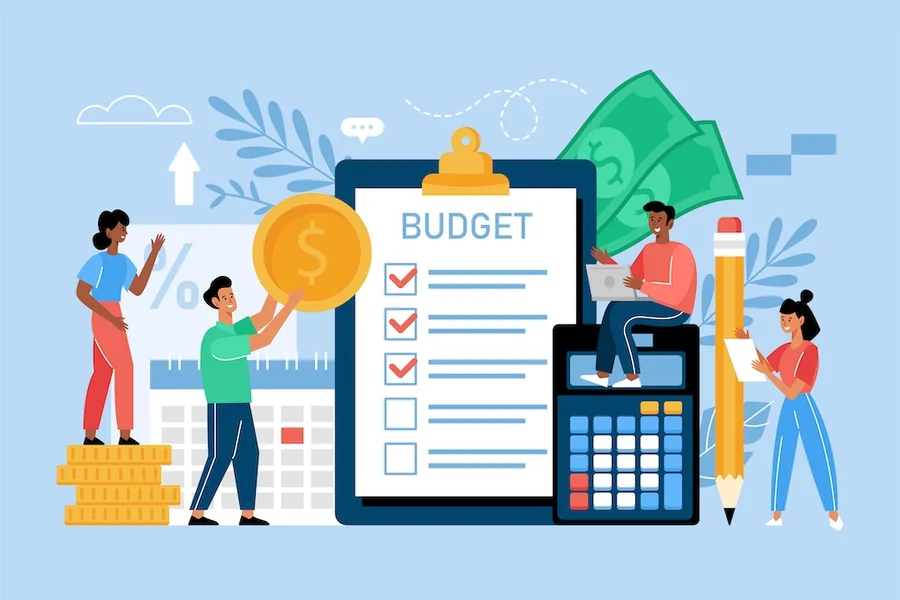
Learning to Plan the Budget
Budget planning refers to the process of spending your money in a clever and well-organized manner so that you are aware of what happens to your income at all times. It can be quite complex but really, it is only about keeping a record of what you earn, what you spend and what you save. Such a budget will help you to keep track of your finances rather than being caught up with where your money has gone at the end of the month.
Budgeting is all about balance. You make money through various sources, such as salary or freelance or small businesses and then you categorize cash into needs, wants, savings and emergencies. After getting acquainted with this fundamental framework, it becomes so much easier and less stressful to handle money.
When you are on your initial steps in the financial world, it is beneficial to consider the simple and practical lifestyle/money management concepts that will aid in better decision-making. Here also you can find helpful inspiration: onpresscapital.
. Getting used to little habits when you are young can be the difference between having a good time managing your income in the future.
Budget planning is not concerned with making yourself handcuffed. Rather it makes you free by assisting you to spend freely and save without any confusion. By understanding your boundaries, you will be able to spend your money in a more responsible way.
The reason Budgeting is important to a beginner
Budgeting is particularly significant among novices since they develop financial discipline at a tender age. In the absence of budget, it is quite easy to spend excessively on needless things and become unable to save later. Most people tend to only understand the need to budget when they are under financial stress but early starts will make you avoid that.
Control is one of the largest advantages of budgeting. It is when you trace your income and expenses that you know your financial behavior more. You begin to see trends, including where your money is spent and what you can cut down. This knowledge by itself will aid you in making wiser decisions.
The other significant reason why budgeting is important is that it assists you in preparing against an emergency. Life is unpredictable and any time something can arise which requires spending such unexpected costs as medical expenses, repairs or travel. A budget would mean that you would always have some money to save in case of such a situation, and it would help you to reduce the stress when such a situation occurs.
Budgeting also assists the long-term objectives. You want to purchase a phone, establish a business, or save to further your education, a clear financial plan will make your targets achievable and at a faster rate. You begin to put what is important first, instead of spending money without thinking.
How to make a Budget in 10 steps
Creating a budget is not as difficult as it seems. You just need to take it step-by-step and be consistent.
The initial thing is to compute your total income. It covers all the sources of funds you get within a month. It is important to know your income down to the penny since this is the basis of your whole budget.
Then, enumerate all your expenses. Break them down into fixed expenses such as rent, utilities and transportation and variable expense such as food, entertainment and shopping. This will assist in knowing what costs are required and which costs can be varied.
After listing expenses, compare them with your income. In case your expenditure exceeds your income, then you have to make some changes. This could be reduction of unnecessary expenditures or exploration of ways of augmenting your income.
Now, form spending categories. The easiest way is the 50/30/20 rule, in which 50 percent of your earnings are spent on necessities, 30 on wants, and 20 on savings. This arrangement is simple to an amateur and aids in balance.
Lastly, monitor your budget. A notebook, spreadsheet, or mobile app is one of the ways you can track your expenses. Keeping track will help you keep within budget and not spend too much.
Consistency is the key to successful budgeting. Although you might be wrong initially, continue developing your system as time goes by.
Smart Saving and Spending Strategies
When you already have a simple budget, the second thing to learn is how to save and spend the money in a wise manner. Intelligent money management will assist you in maximizing the usage of funds and still living your life.
One approach that can be implemented is to focus on needs rather than wants. Needs are fundamental costs such as food, shelter and transportation but wants such as entertainment, dining out and shopping. The needs first approach will enable you to have your basic financial needs taken care of at all times.
The other helpful practice is automatic saving. You should transfer some fixed sum of money to your savings account whenever you get your income, as much as possible. By doing so, you can maximize APY without necessarily having to think about it. Whats APY? Annual percentage yield is the total amount of money you gain from interest on a savings account over the span of a year.
It is also important to avoid impulse spending. A lot of individuals make purchases impulsively, particularly online or on sale. Taking a brief break before spending money can make you think over whether you really need the item or not.
Final Thought
Budget planning is not restricting your life as a beginner, it is having control over your life. By knowing your income, monitoring your costs and planning your savings, you form a good financial base that supports both your current and future aspirations.
Budgeting is a skill that can be perfected with time; that is the most vital aspect to remember. You need not be an ideal at the outset. It is all about consistency and desire to get better with time. The simplest things, such as monitoring daily spending or saving a small portion of funds, can result in considerable financial gains.
Having the right attitude and an easy routine, every person can create a healthy financial routine. Budgeting makes you confident, lessens stress, and enables you to make superior decisions with your cash daily.