
How On-Site Fuel Delivery Saves Construction Crews Time and Money
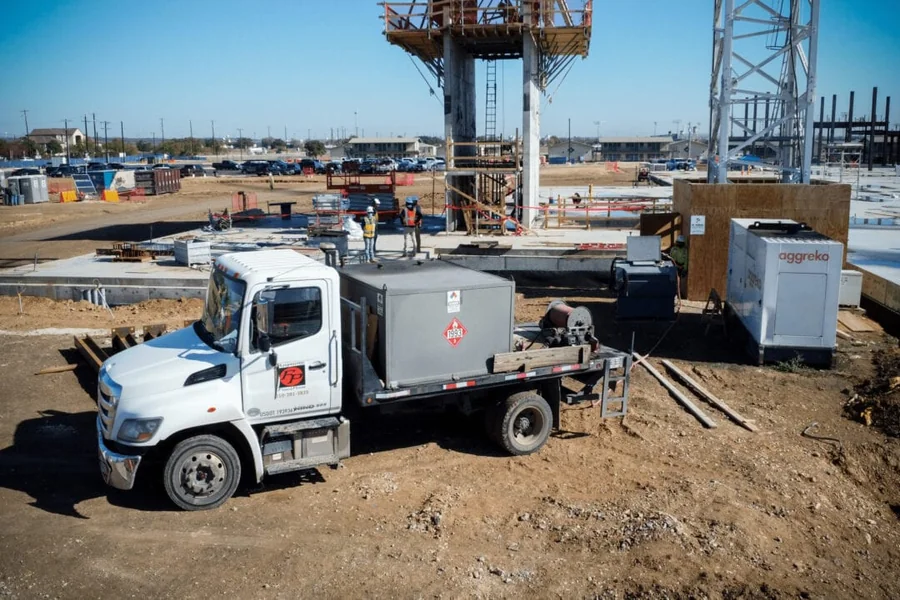
If you run a construction crew, you already know this scene well. Someone has to stop what they’re doing, drive to the nearest gas station, wait in line, fill up a few cans or a truck, and drive back to the site. That doesn’t sound like much the first time, but when it happens several times a week across a project, those lost hours start costing more than they seem to.
For small and mid-sized construction businesses, the time spent driving to a gas station is time that isn’t being billed to any client. And on a job site where every productive hour counts toward hitting a deadline, that’s a real loss, not a minor inconvenience.
What on-site fuel delivery actually is
On-site fuel delivery works in a simple way. Instead of sending a crew member or a truck off to a gas station, a specialized company brings the diesel, gasoline, or diesel exhaust fluid (DEF) directly to the job site, whether that’s straight to a fleet of pickups, a generator running temporary power, or heavy equipment parked at the end of the day.
Companies like Fuel Monkey, which offers diesel delivery to construction sites across Texas around the clock, have built their entire service around this exact problem. The idea is straightforward: a job doesn’t stop just because it’s midnight, a holiday, or the site is a muddy mess that’s hard for a regular vehicle to reach. The fuel still shows up.
Why it makes sense for a construction business
For a contractor watching costs closely, every dollar matters, and fuel logistics are an easy place to lose money without noticing. Here’s why more construction businesses are switching to this model:
Fewer hours lost to fuel runs. A crew member who isn’t driving to a gas station is a crew member who’s still working. On an hourly job, that saved time turns directly into money, and it keeps equipment operators from sitting idle waiting on fuel.
Better pricing on volume. Buying diesel in bulk almost always costs less per gallon than filling up truck by truck at the pump, which adds up fast across an active fleet.
Fewer bad surprises. With scheduled deliveries, a generator or a piece of heavy equipment never runs dry at the worst possible moment, like the middle of a pour or right before a weekend when no one’s around to notice.
DEF compliance covered. Most modern diesel trucks and equipment need diesel exhaust fluid to run properly. Running out of DEF mid-project can cause an engine to lose power or shut down entirely. Having a provider that delivers DEF alongside diesel takes that headache off a superintendent’s plate.
Access to sites that are hard to reach. Job sites aren’t always easy to drive into. Delivery services built for construction are used to working around mud, grading in progress, or limited vehicle access, which a regular gas station trip can’t accommodate.
What to ask before hiring a provider
Not every fuel delivery company operates the same way, so it’s worth asking a few questions before choosing one for a project:
- Do they guarantee a delivery window, or is scheduling more flexible than fixed
- Can they deliver to both bulk storage tanks and directly to equipment on site
- Is DEF included in the service or billed separately
- How far does their coverage actually reach, since some companies only serve a limited radius
That last question matters if a company is running more than one active job site at a time. A provider that’s reliable on one site but doesn’t cover the second isn’t solving the whole problem.
A practical decision, not a luxury
Many contractors assume fuel delivery is a service only for large builders, but it actually makes more sense for small and mid-sized construction businesses, the ones that can least afford to lose work hours to unnecessary trips or a stalled crew waiting on fuel.
If your business runs trucks, heavy equipment, or generators on site, it’s worth doing the math. How much is the time your crew spends driving to the gas station every week actually costing the project? In most cases, that cost ends up higher than the price of a delivery service.